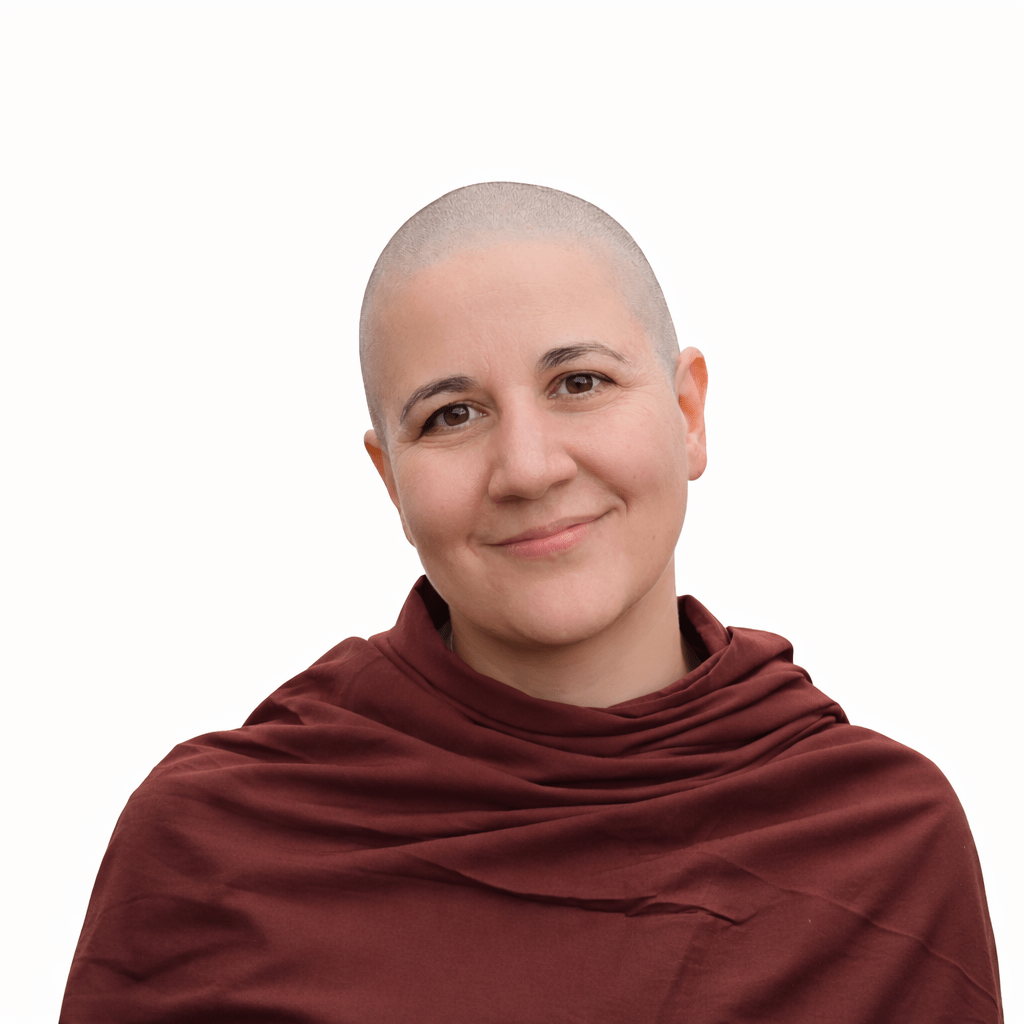
Born in Italy in 1980, Bhikkhunī Dhammadinnā went forth as a monastic in the Theravāda Buddhist tradition of Sri Lanka in 2012. She studied Indology, Indo-Iranian philology and Tibetology at the University of Naples ‘L’Orientale’, at the International Research Institute for Advanced Buddhology at Soka University in Tokyo and at the Institute for Research in Humanities at Kyoto University. Dhammadinnā obtained an MA in 2004 (University of Naples ‘L’Orientale’) with the study of an unpublished Tibetan bonpo canonical text, and a PhD in 2010 (University of Naples ‘L’Orientale’) with a dissertation on the Khotanese ‘Book of Zambasta’ and the formative phases of Mahāyāna ideology in Khotan in the fifth and sixth centuries. Her scholarly work focuses on the early Buddhist discourses, the Middle Period of Indian Buddhism, the doctrinal and historical development of Buddhist meditative traditions in India, and monastic legal ideologies, drawing on primary textual sources in Pāli, Sanskrit, Tibetan, Chinese and Khotanese. She is the co-founder (with Bhikkhu Anālayo) and director of the Āgama Research Group (established in 2012) and serves as a visiting associate research professor in the Department of Buddhist Studies of the Dharma Drum Institute of Liberal Arts in Taiwan. She is currently a visiting professor for Buddhist Studies at the University of California at Berkeley. Having lived and worked in the UK, Nepal, Burma/Myanmar, Japan, Taiwan, and Sri Lanka, she has now been based in Italy for a few years. Dhammadinnā has been practicing meditation since 1996 and teaching it internationally since 2017, drawing on early Buddhist primary sources with mindfulness of how their historical and ideological developments impact practice.
 bhikkhunī Dhammadinnā